
Session path
The whole day laid out in order, with the time each sprint and break should land.
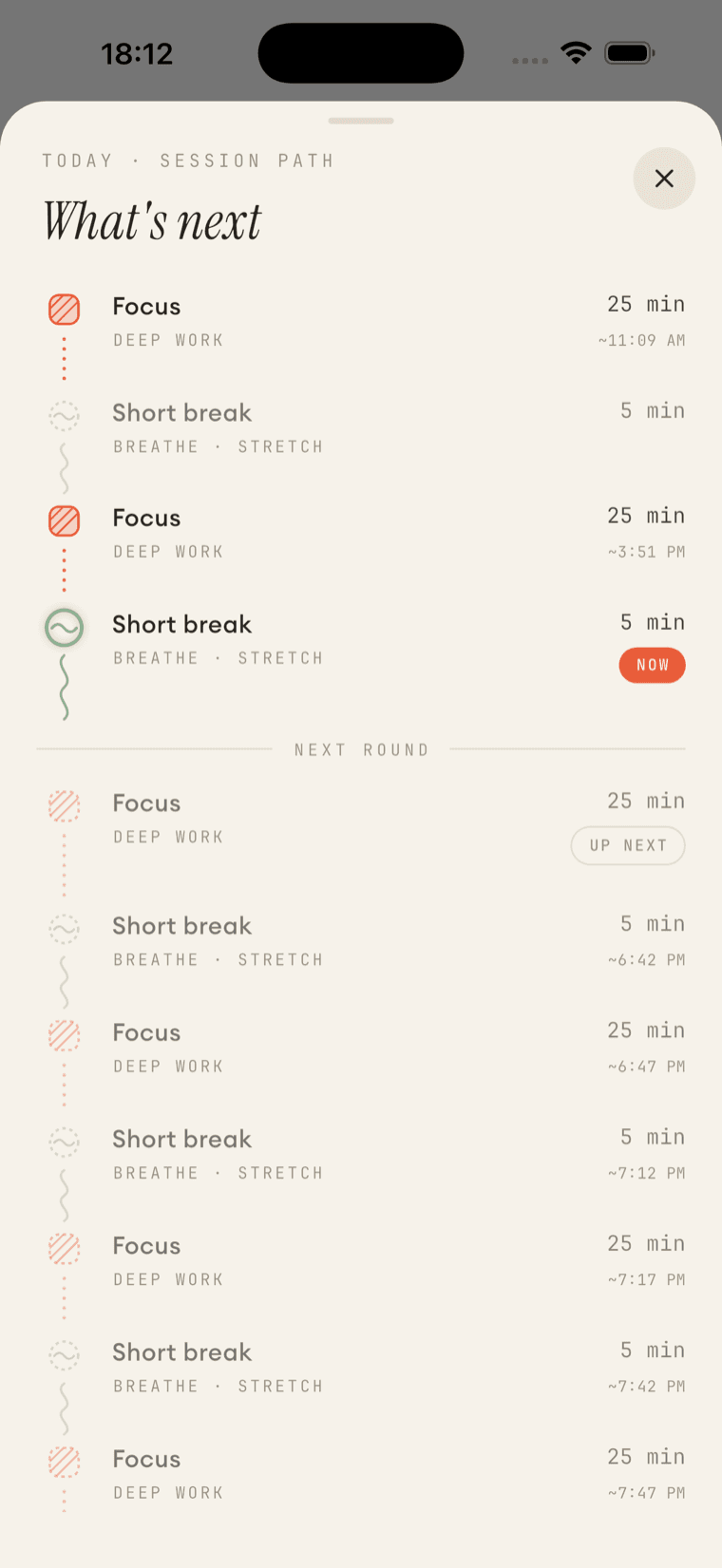
The session path answers one question: what's next. It lays the day out as a single column — every focus sprint and every break, in order, each with its length and the clock time it is expected to land at.
Reading it
Two markers tell you where you are. NOW sits on the block that is running. UP NEXT sits on the one after it, so the next move is visible without counting down the list.
Beneath those, the path continues into the next round — the same cadence repeating — with each block carrying an approximate finish time. Those times are estimates, not appointments: they assume you take the breaks as scheduled, and they shift when you do not.
Why it helps
A list of sprints is easier to face than an unbounded afternoon. Seeing that the fourth focus block lands at 6:47 PM tells you two useful things at once — that there is room for four, and that there is not room for six.
It also makes the breaks feel earned rather than optional. They are drawn at the same size as the work, in the same column, which is the honest way to draw them.
If the path runs later than you want to work, the fix is fewer rounds, not shorter breaks. Cutting rest to fit more sprints in is what makes the last sprint of the day worthless.
Each block on the path corresponds to a real session once it runs, and those sessions are what the progress view counts.