
Breaks
A screen of its own — a breathing guide, a scene, and a sound to rest to.
A break in Porotimer is a separate screen, not a paused timer. That distinction is the whole point: if the break looks like the work with the numbers going the other way, you will skip it.
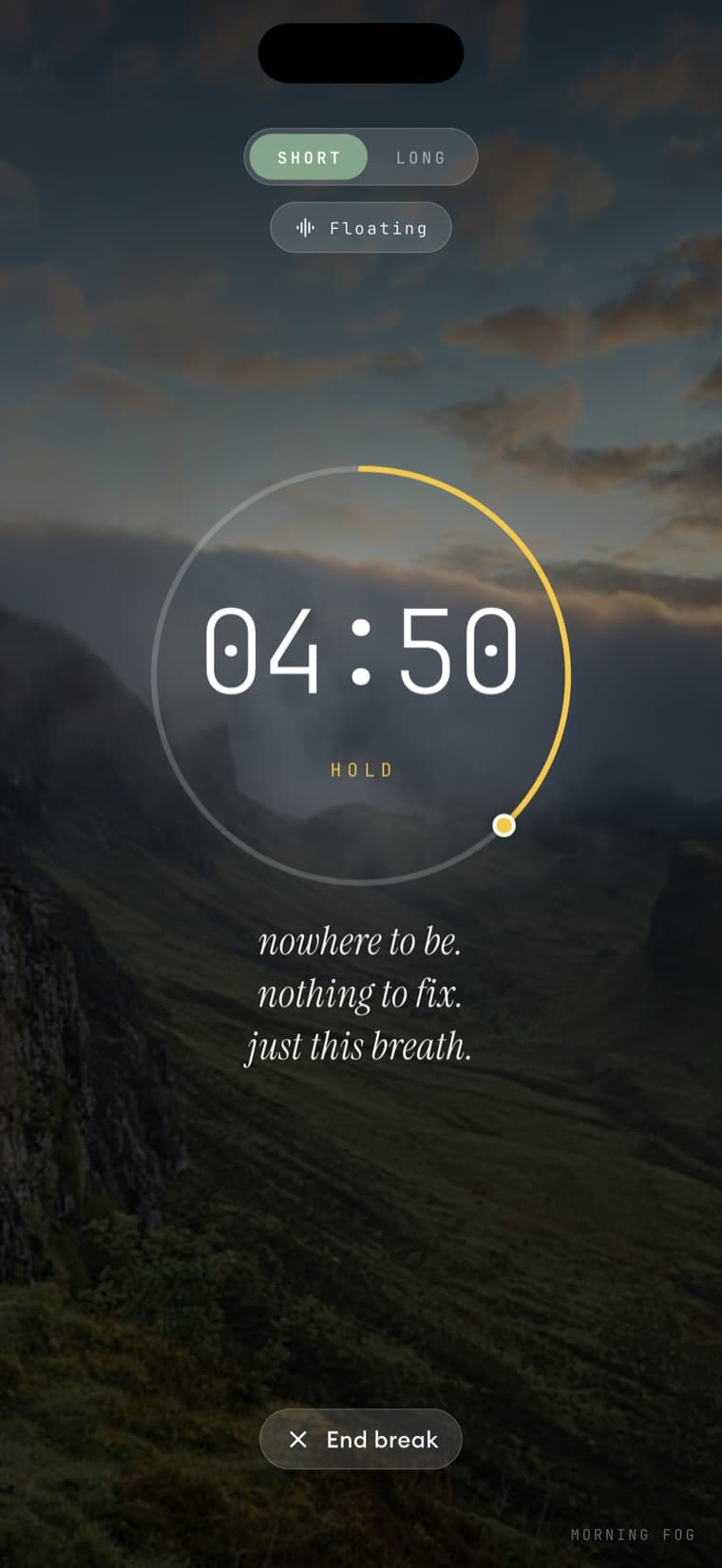
Short and long
The toggle at the top switches between the two lengths your flow defines. A short break follows an ordinary sprint; a long one follows a longer stretch of them.
You can end a break early. There is no penalty for it, and no reward either.
The breathing guide
The ring around the countdown paces your breathing, and the word inside it tells you which part you are in — hold, and the phases either side of it. Following it is optional; it is there because a five-minute break spent scrolling is not a break, and a breath is the easiest possible substitute.
Underneath sits a line to rest on rather than read — nowhere to be, nothing to fix, just this breath.
Scenes and sounds
Each break plays over a scene, named in the corner. Alongside it you can pick a sound to rest to, with its own volume.
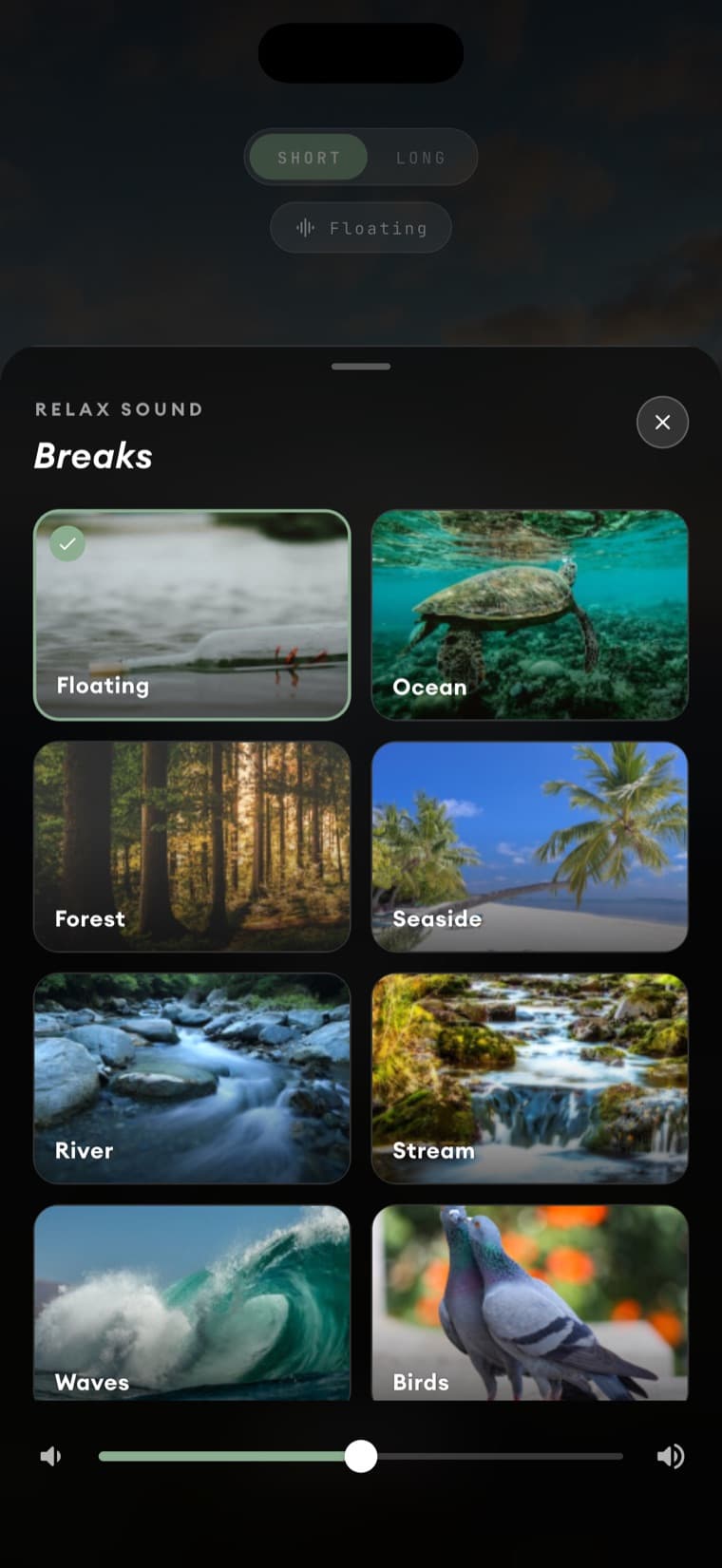
The current set is Floating, Ocean, Forest, Seaside, River, Stream, Waves and Birds.
Pick the sound before the break starts, not during it. Choosing between eight soundscapes is a decision, and the break is meant to be the part of the day with no decisions in it.
Why the break is the hard part
Almost everyone who abandons the Pomodoro Technique abandons the break first. The sprint is easy to like — it is permission to concentrate. The break asks you to stop while the work is going well, which feels like losing momentum and is in fact how you keep it. The fourth sprint of a day with breaks is better than the second sprint of a day without them.