
Iceberg Model
Systems ThinkingThe event is the tip. Underneath sit the patterns, structures and beliefs producing it — and those are the only levers that change anything.
Something goes wrong and you fix the thing that went wrong. The release slips, so you work the weekend. It slips again next month.
The Iceberg Model says the event you reacted to is the visible tip of something larger, and that everything with real leverage sits below the waterline.
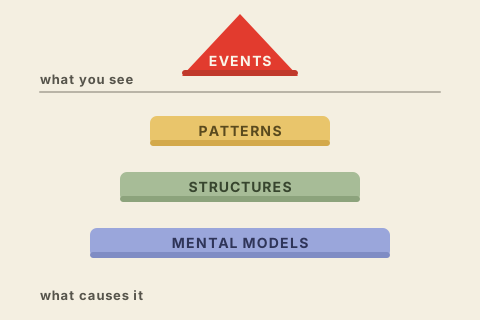
The four layers
- Events — what happened. "The release slipped." Visible, urgent, and the only layer most responses ever touch.
- Patterns — what keeps happening. "It has slipped four quarters running." Requires memory rather than attention.
- Structures — what produces the pattern. Deadlines set before scoping, no slack in the schedule, one person who must review everything.
- Mental models — what makes the structure feel normal. "A deadline we might miss is not a real deadline." Invisible, and the reason the structure survives being pointed at.
The layers are ordered by leverage, and almost exactly inverted against where effort goes.
Working out what is under the waterline takes uninterrupted thinking, not a spare ten minutes. Porotimer gives you a focused block on your iPhone.
Download on the App Store
Why fixing events never works
An event-level fix is genuinely satisfying: it is fast, visible, and it works once. That is the trap. Because it works, nobody looks lower, and the structure that generated the event stays exactly as it was — so the event returns, and each return makes the fix feel more necessary rather than less.
Worse, event-level fixes often strengthen the structure. The weekend that rescues a slipped release also removes the evidence that the schedule was impossible, which makes the next impossible schedule easier to set.
What it looks like in practice
Say you keep ending the day without touching the work that mattered.
Today got eaten. Tomorrow you will start earlier and try harder. You have made this promise before.
Pattern: mornings vanish every day, not just today. Structure: your calendar is open to anyone, and you triage messages before deciding your own priority. Mental model: "being responsive is part of the job."
The structural fix — a blocked first hour, messages after it — is unglamorous and permanent. The event fix is neither.
Depth has a cost. Not every event has a structure worth excavating, and treating a one-off as systemic wastes the analysis on noise. Go down a layer when it is the second or third time.
When to reach for it
Reach for it when a problem recurs, when the same fix keeps being needed, or when a fix in one place makes something worse elsewhere — that last one almost always means you are at the wrong layer.
It shares a foundation with second-order thinking: both say the interesting effects are the ones you do not see immediately. Iceberg looks backwards at what produced an event; second-order looks forwards at what an action will produce. If what you need is simply to decide which of today's tasks matters most, the Eisenhower Box will get you there faster.
More mental models

Strip a problem to what you know is true, then build your answer back up from there.

Instead of asking how to succeed, ask what would guarantee failure — then avoid that. The negative answer is usually far more concrete.
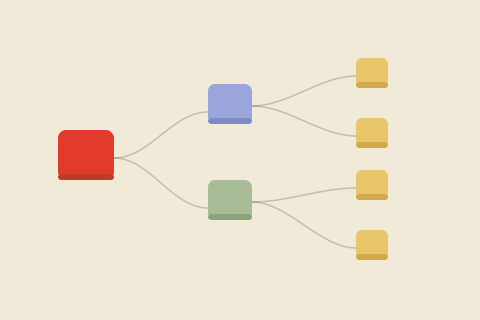
Ask what happens after what happens. Most bad decisions look good one step out and fall apart at step two.