Timeboxing Technique
Maximize your productivity with Timeboxing. Learn how to effectively manage your time by assigning fixed intervals to tasks, boosting focus, efficiency, and work-life balance.

Maximize your productivity with Timeboxing. Learn how to effectively manage your time by assigning fixed intervals to tasks, boosting focus, efficiency, and work-life balance.
A to-do list tells you what to do, but never when. So you start the day with the best intentions, get pulled into email and meetings, and look up at 5pm wondering where the hours went — with the important work still untouched.
Time blocking fixes that by turning your list into a schedule. You divide the day into blocks and assign each one a specific task, so there's no ambiguity about what you should be doing right now. In this guide you'll learn how to block a day and make the habit stick.
Start a timer for each block and let focused pomodoros carry you through it — breaks included.
Start for free
Try time blocking if you…
- Have a to-do list that never seems to shrink
- Lose hours to context-switching and shallow work
- Underestimate how long things actually take
What is time blocking?
Time blocking is a scheduling method where you divide your day into blocks of time and dedicate each one to a specific task or type of work. Instead of working from an open-ended list, you work from a calendar — at any moment, you know exactly what you're meant to be doing.
It's a favorite of deep-work advocates like Cal Newport, and it comes in a few flavors: task batching groups similar work together, and day theming gives each day a single focus.
Use time blocking because it…
- Removes the "what should I do next?" decision that drains focus
- Makes over-commitment obvious — a full calendar can't lie
- Reserves protected space for deep, important work
1. Start with your task list
Before you touch the calendar, write down everything you need to do — work tasks, errands, breaks, meals. Then estimate roughly how long each will take. Time blocking is only as good as those estimates, and most people underestimate, so add a little buffer.
Quick tips
- Separate deep-focus tasks from shallow, low-energy ones.
- Rank the list so the most important work gets the best blocks.
2. Block out your day
Open your calendar and place each task into a specific slot. Put your hardest, most important work in your peak-energy hours — for most people, the morning. Schedule shallow tasks like email for the dips in your day, and don't forget to block breaks and lunch as real appointments.
3. Batch similar work together
Every switch between different kinds of work carries a hidden cost — your brain needs time to change gears. Group similar tasks into a single block: answer all your emails at once, make all your calls back-to-back. If your week allows it, go further and give whole days a theme, so you stay in one mode longer.
Sort first: Use the Eisenhower Matrix to decide what deserves a block before you schedule anything. See the matrix →
4. Guard your blocks
A block only works if you honor it. During a focus block, treat it like a meeting with yourself: silence notifications, close extra tabs, and let messages wait. When something urgent genuinely interrupts you, don't abandon the plan — move the block to later in the day rather than tearing up the whole schedule.
Leave some blocks deliberately empty, too. Unplanned things always come up, and a little buffer keeps one surprise from toppling the rest of your day.
5. Review and adjust
At the end of the day, compare your plan to what actually happened. Did tasks take longer than you thought? Did a block never get its turn? This isn't about guilt — it's data. Over a week or two, your estimates sharpen and your blocks start to match reality, which is when time blocking really pays off.
Many people block tomorrow at the end of today, while the work is fresh — so they start the next morning already knowing exactly where to begin.
Boxes usually fail in one direction: they get sized from what you hope rather than what last month actually took. Second-order thinking is a useful check — ask what happens after a box overruns, not just whether it will. When you are ready to run one, a 45-minute timer is a sensible default block.
Tips to make it stick
- Overestimate on purpose — padding beats a schedule that collapses by 10am.
- Block breaks and meals too — a schedule with no rest never survives.
- Keep a "done today" log — seeing filled blocks is quietly motivating.
Find more productivity methods

Learn how to streamline your life and boost productivity with the Getting Things Done method. Discover actionable steps to master GTD and achieve mental clarity.
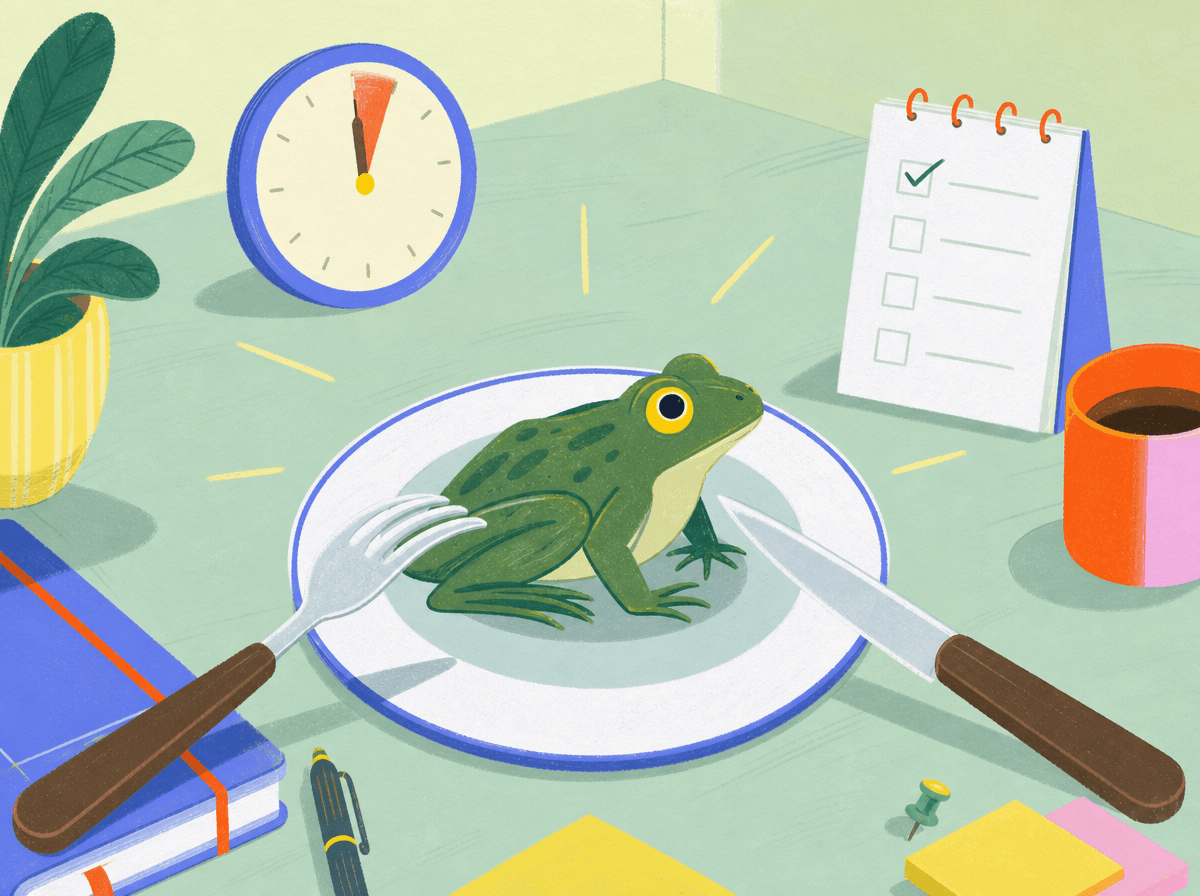
Boost productivity with the Eat That Frog method. Learn how tackling your most challenging task first each day can enhance focus, reduce procrastination, and improve time management
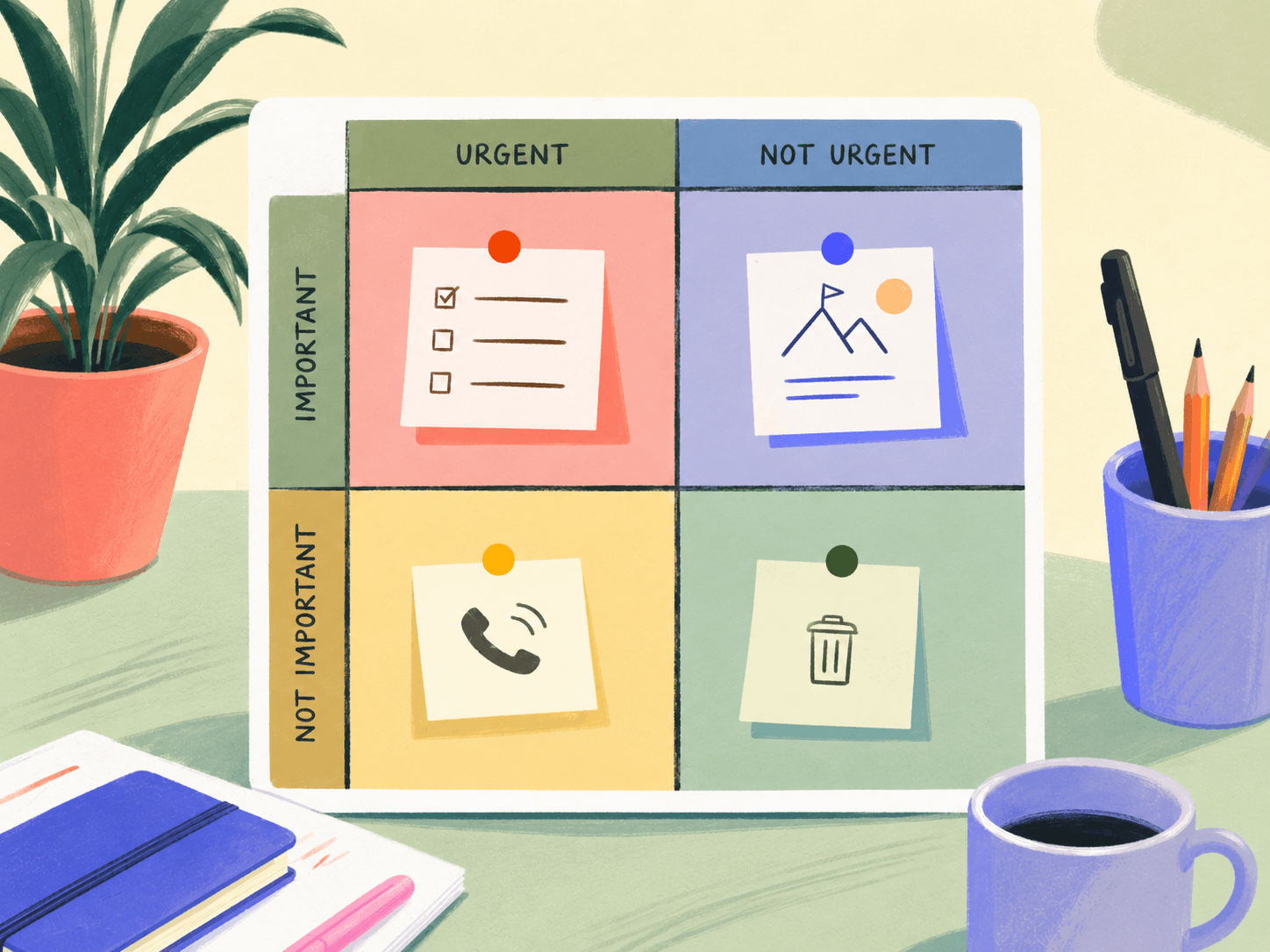
Learn how to boost productivity and manage your time effectively with the Eisenhower Box method. Discover how to prioritize tasks based on urgency and importance to achieve more every day.