The Pomodoro Technique
Discover the history, principles, and benefits of the Pomodoro Technique. Learn how to apply it daily for work and study, and optimize your sessions with Porotimer.com.

Discover the history, principles, and benefits of the Pomodoro Technique. Learn how to apply it daily for work and study, and optimize your sessions with Porotimer.com.
Do you ever feel like you spend more time thinking about your tasks than actually doing them? Worrying about everything you've yet to do can be exhausting — especially when the list doesn't seem to get any smaller.
The Pomodoro Technique is a time-management method built on a simple idea: work in short, focused intervals with regular breaks in between. Instead of facing an endless day, you commit to just one 25-minute sprint at a time. In this guide you'll learn how it works and how to make it a habit that sticks.
Timers, breaks, and a distraction shield, ready to go. Start your first pomodoro in seconds.
Start for free
Try the Pomodoro Technique if you…
- Struggle to start, or get pulled off track easily
- Feel drained by the sheer size of your to-do list
- Lose track of time, or forget to take real breaks
What is the Pomodoro Technique?
It breaks work into short, timed intervals — traditionally 25 minutes — separated by brief breaks. Each interval is called a pomodoro. A single, protected block of time is far easier to commit to than an open-ended task, and the regular breaks keep your attention fresh.
It was developed by Francesco Cirillo in the late 1980s, who used a tomato-shaped kitchen timer to track his intervals — pomodoro is Italian for tomato.
Use the Pomodoro Technique because it…
- Makes starting easy — "just 25 minutes" beats an open-ended task
- Protects deep focus by removing task-switching
- Builds in rest, so energy stays steady all day
1. Choose a task
Pick one thing to work on — a single, concrete task. The whole point of a pomodoro is undivided attention, so resist the urge to batch three things into one block. If your task is huge, choose just the next slice of it.
Quick tips
- Name the task in one line so you know exactly what "done" looks like.
- If it takes more than 4 pomodoros, break it into smaller tasks.
2. Set a 25-minute timer
That single 25-minute block is one pomodoro. Setting a timer turns a vague intention into a clear commitment — you're not working "until it's done", you're working until it rings. Twenty-five minutes is the classic length, but the ratio matters more than the exact number.
3. Work until it rings
For the length of the pomodoro, work on that one task and nothing else. No email, no messages, no quick "just checking" detours. If a distraction or a new to-do pops into your head, jot it down on a list and get right back to the task.
If you're interrupted and truly can't continue, it's better to end the pomodoro and start fresh than to limp through a broken one. The block is meant to be whole.
4. Take a 5-minute break
When the timer rings, stop — even mid-sentence. Take five minutes to step away from the screen: stretch, refill your water, look out a window. The break isn't a reward you have to earn; it's part of the method, and it's what keeps the next pomodoro sharp.
Dive deeper: Porotimer's guided break gives you a calm scene and a breathing cue so you actually rest. See how breaks work →
5. Repeat, then rest longer
After the break, start the next pomodoro. Once you've completed four, take a longer break — 15 to 30 minutes — to properly recharge before the next round. Over the day, those completed pomodoros become a simple, honest record of the focus you actually put in.
Reviewing that record is quietly motivating: it shows momentum, and it helps you estimate how many pomodoros a task really takes next time.
Twenty-five minutes is inherited, not derived — Cirillo's kitchen timer, not a finding about attention. If you would rather work out the right length for your own work than adopt the default, that is exactly what first principles thinking is for.
Tips to make it stick
- Protect the break as fiercely as the focus — resting is the method, not a treat.
- Keep a "distraction list" — capture stray thoughts and deal with them later.
- Tune the lengths to your rhythm — 50/10 works for some. The ratio beats the exact numbers.
Find more productivity methods

Maximize your productivity with Timeboxing. Learn how to effectively manage your time by assigning fixed intervals to tasks, boosting focus, efficiency, and work-life balance.

Learn how to streamline your life and boost productivity with the Getting Things Done method. Discover actionable steps to master GTD and achieve mental clarity.
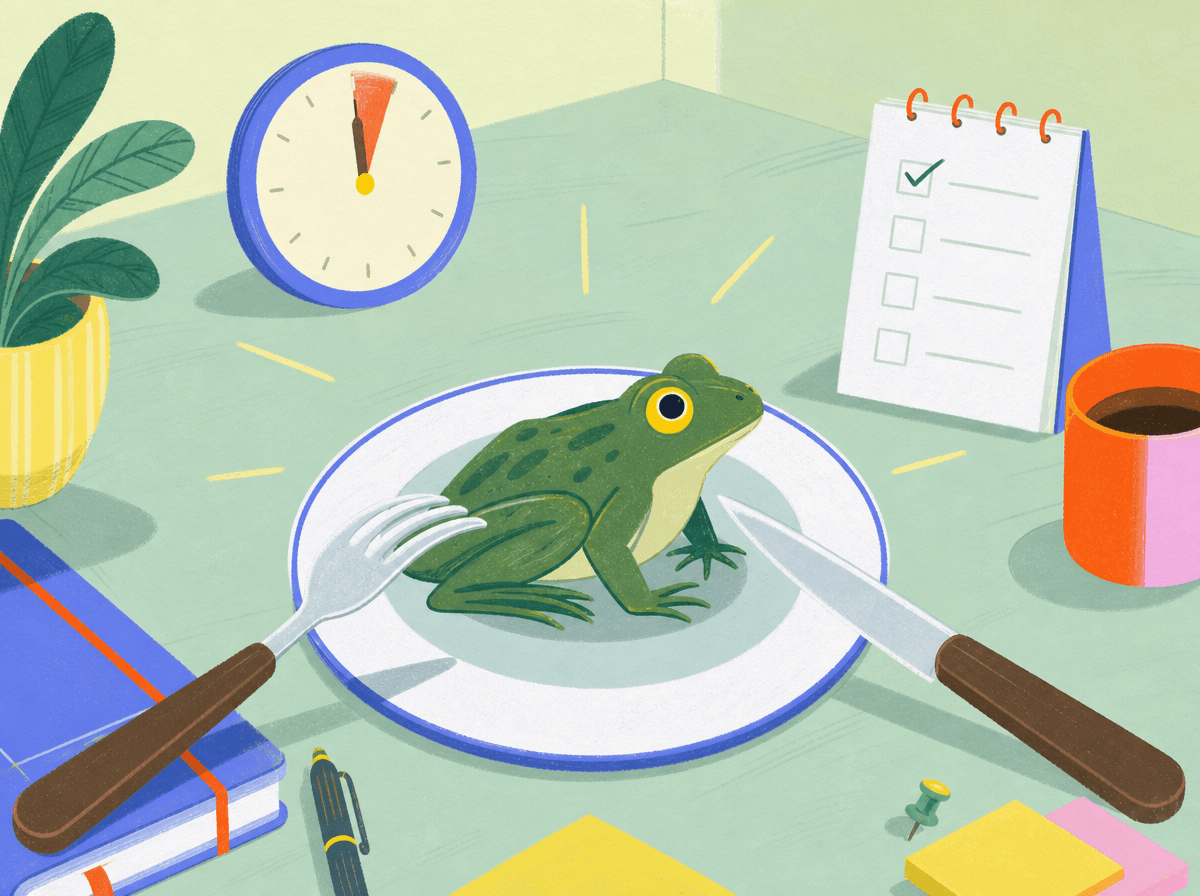
Boost productivity with the Eat That Frog method. Learn how tackling your most challenging task first each day can enhance focus, reduce procrastination, and improve time management