Tabata Timer
Eight rounds of twenty on, ten off. Four minutes, if you do it properly.
READY
8 rounds · 20s work · 10s rest · 3:50 total
Tabata is four minutes long and has a worse reputation than it deserves, mostly because the name got attached to any workout built from twenty-second intervals. The original is narrower than that: in 1996, Dr Izumi Tabata and the coach of Japan’s national speed skating team tested eight rounds of twenty seconds at roughly 170% of VO2 max, with ten seconds between them. Four minutes of that improved anaerobic capacity more than an hour of steady moderate cycling.
The clock is the easy part, and it is the part this page handles. What makes it Tabata is what you do in the twenty seconds.
What to use it for
The original protocol
Twenty seconds at everything you have, ten seconds of nothing, eight times. Four minutes, and it should not be survivable at a conversational pace.
Finishing a session
Four minutes at the end of a normal workout, when there is nothing left to protect and no reason to pace yourself.
Bodyweight circuits
Burpees, squat jumps, mountain climbers. The protocol does not care what the exercise is, only how hard the twenty seconds are.
Any interval you like
The settings take any work and rest length and any number of rounds, so the same timer runs 45/15 circuits or 30/30 rowing pieces.
Questions
What is the Tabata protocol?
Twenty seconds of maximal effort followed by ten seconds of rest, repeated eight times — four minutes in total. It comes from a 1996 study by Dr Izumi Tabata at Japan's National Institute of Fitness and Sports, run with the national speed skating team.
Is any 20/10 workout a Tabata?
Not really, and this is the most common misunderstanding. The original protocol was performed at roughly 170% of VO2 max — genuinely maximal. A comfortable 20/10 circuit uses the same clock but not the same stimulus, which is why it does not produce the same results.
How long is a Tabata workout?
Four minutes, counted as eight lots of twenty seconds work plus ten seconds rest. The original study had participants warm up for ten minutes beforehand, so the session as a whole is considerably longer than the protocol.
Why does the timer say 3:50 rather than 4:00?
Because it stops at the end of the eighth work interval instead of running a final rest you have no reason to sit through. Eight work intervals and seven rests is 3 minutes 50; the missing ten seconds are the rest after the last round.
Can I change the work and rest lengths?
Yes. The settings accept any work interval, rest interval and round count, so the timer covers 45/15, 30/30, EMOM work and anything else built the same way. It opens at 20/10 across eight rounds because that is the protocol people come here for.
Does it make a sound between intervals?
Yes — distinct cues for the start of work, the start of rest, and the end of the workout, so you can keep your eyes off the screen while you train.
The hard part isn’t the timer
This page counts down, and that is all it does. Porotimer handles the part that decides whether the session actually works.
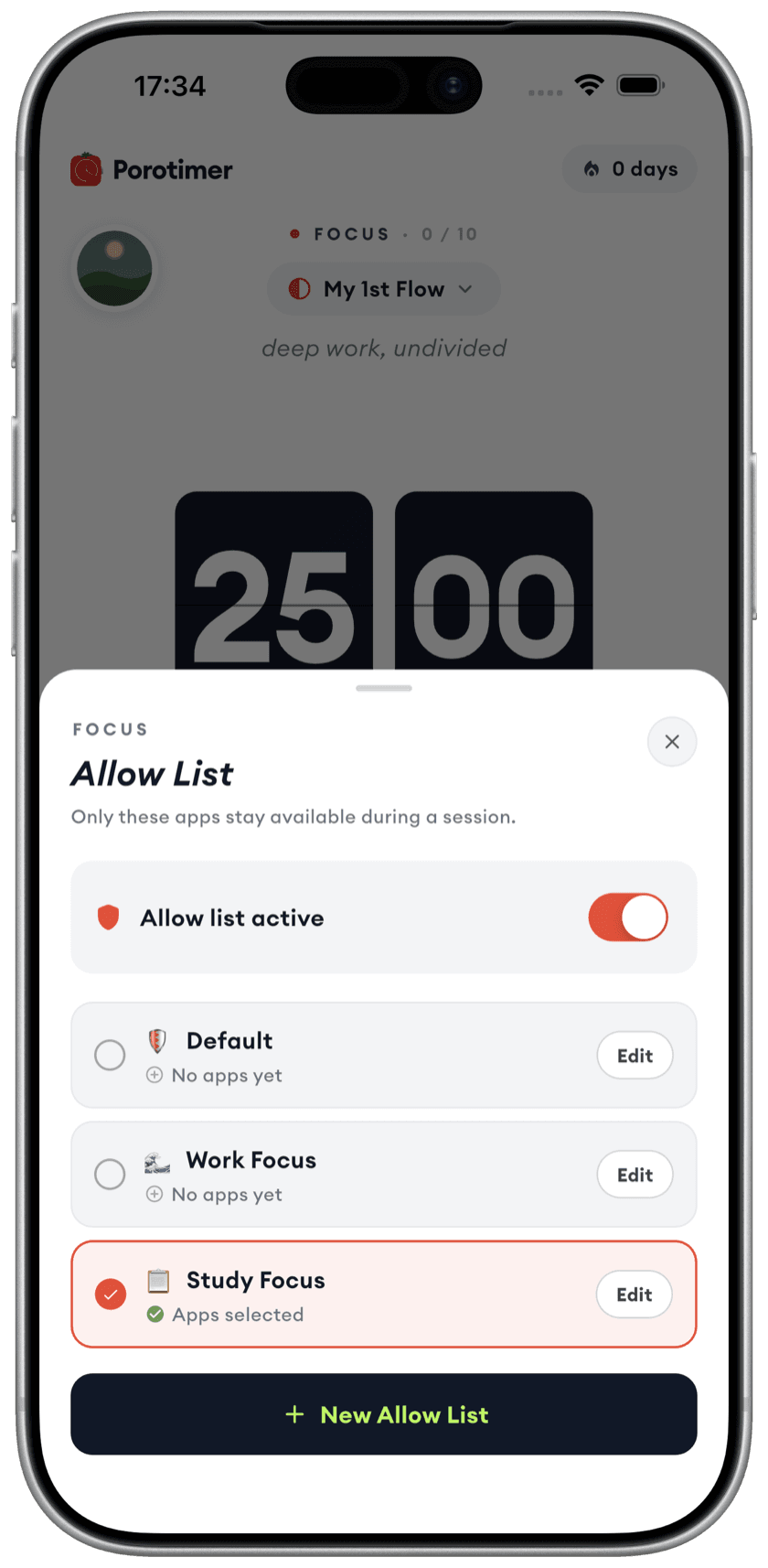
Lock away what breaks focus
Choose the apps you're allowed for the session. Porotimer puts everything else behind a wall until the timer ends — which is the one thing a page in a browser tab can never do.
Learn more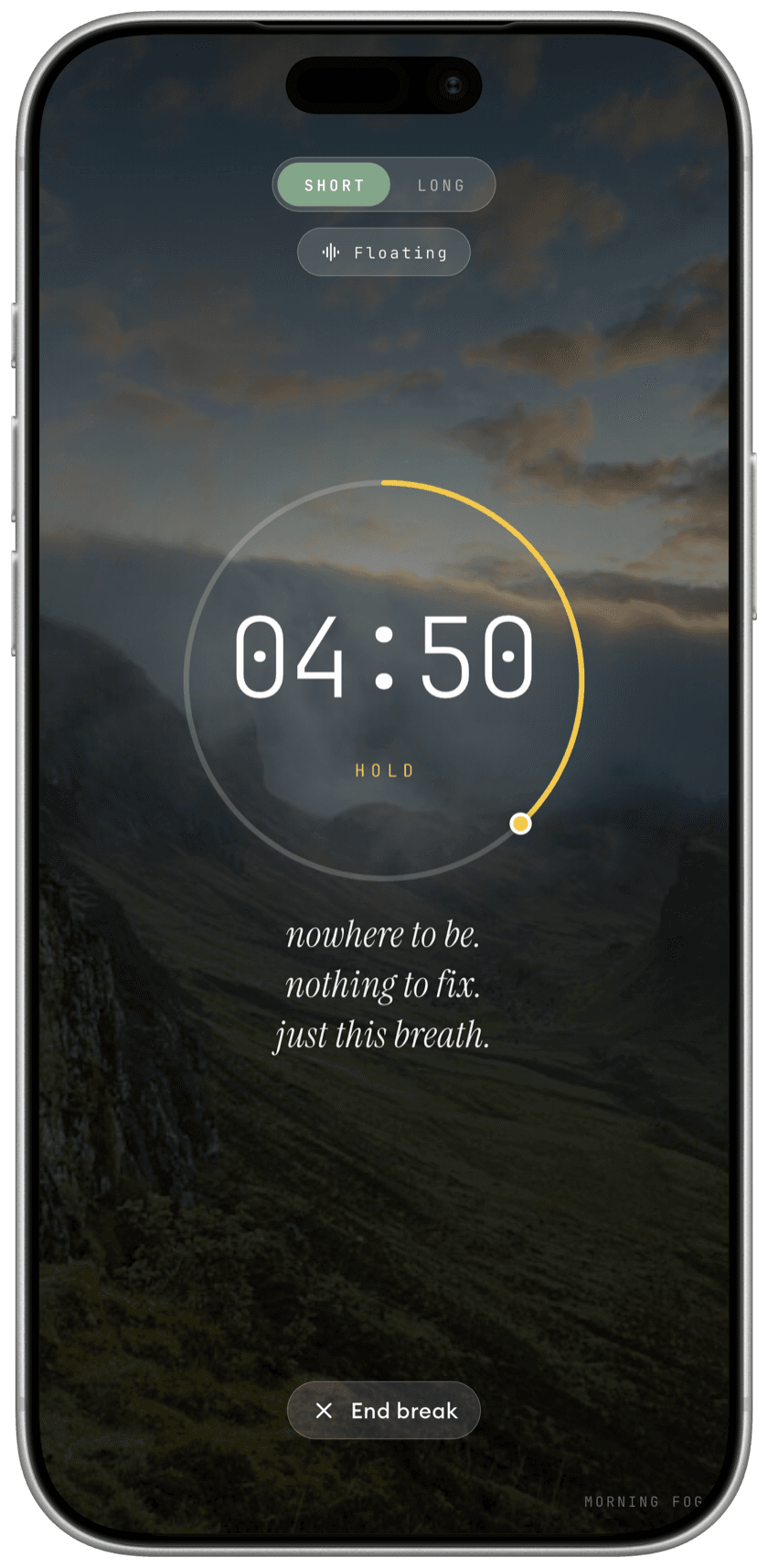
Breaks that actually rest you
A calm scene and a breathing guide when the sprint ends, instead of five minutes of scrolling. You come back settled rather than scattered.
Learn more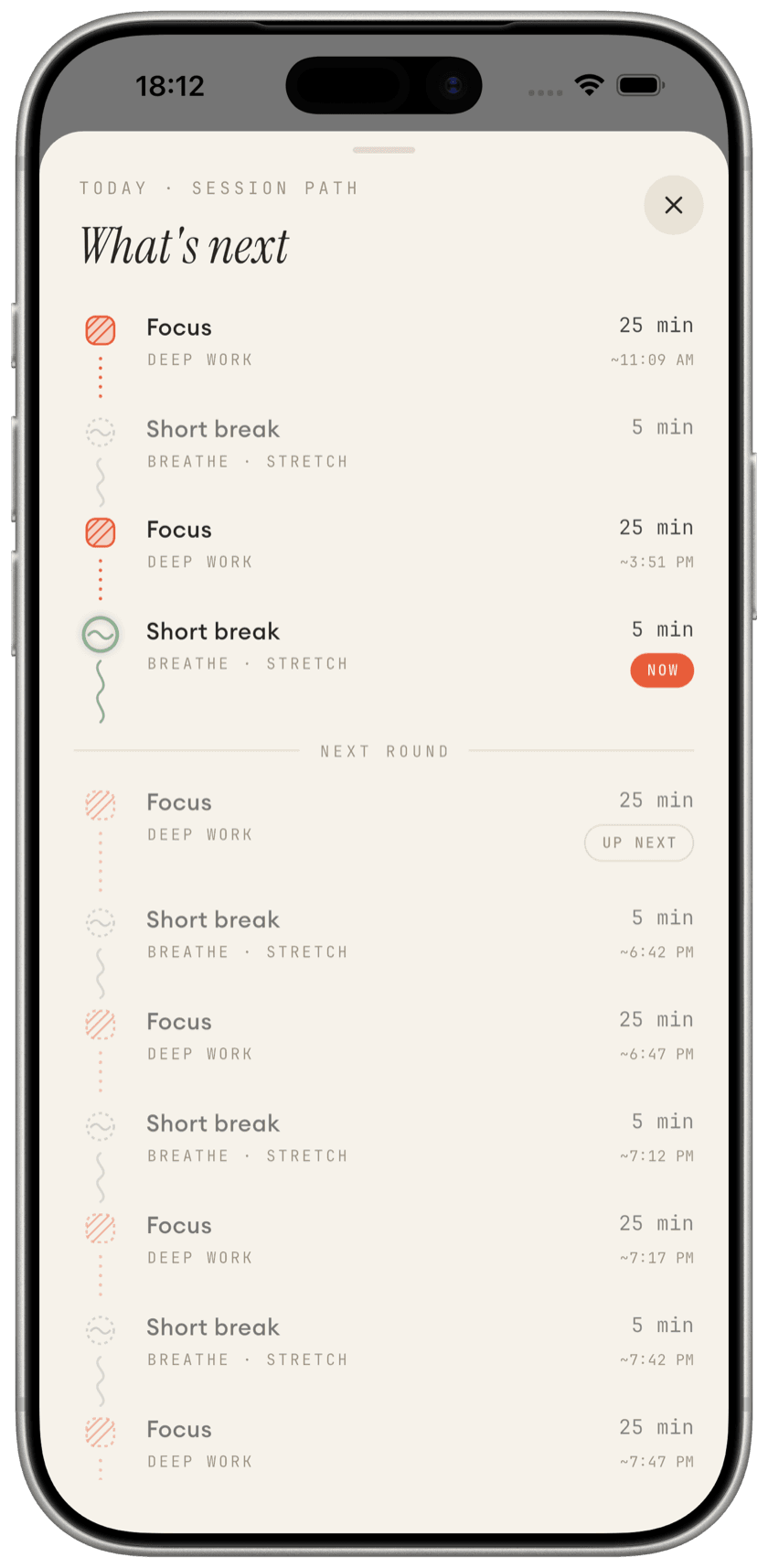
See where the hours went
Every sprint and break laid out in order. The day becomes something you can look back on, rather than something you try to remember.
Learn more