The Science of Breaks: Why Resting Makes You More Productive
Explore the research behind why taking regular breaks improves focus, creativity, and overall work performance.
The Science of Breaks: Why Resting Makes You More Productive
It seems counterintuitive: to get more done, you should stop working more often. But decades of research show that regular breaks aren't just nice to have — they're essential for sustained high performance.
Your Brain Needs Downtime
The Ultradian Rhythm
Your body operates on 90-minute cycles called ultradian rhythms. During each cycle, you move from high alertness to fatigue. After about 90 minutes of focused work, your brain needs 15–20 minutes of rest to reset.
The Default Mode Network
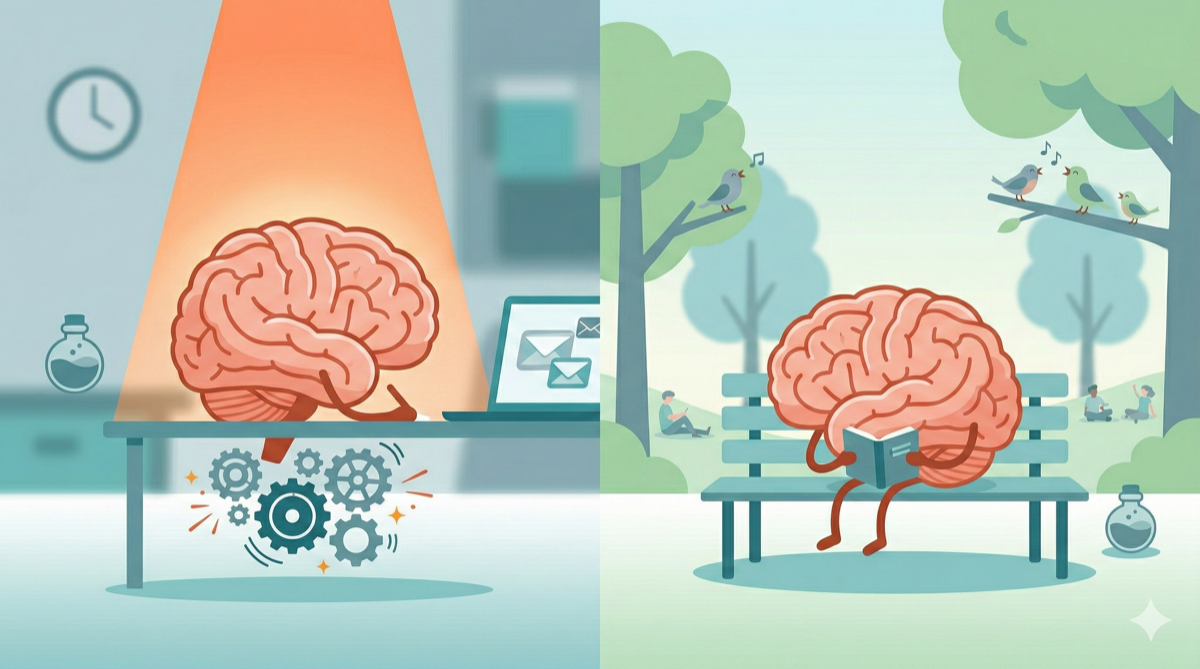
When you take a break and let your mind wander, your brain activates the Default Mode Network (DMN). This network is responsible for:
- Creative problem-solving — Connecting seemingly unrelated ideas
- Memory consolidation — Processing and storing what you've learned
- Self-reflection — Evaluating decisions and planning ahead
This is why your best ideas often come in the shower or on a walk — your DMN is active.
Attention Fatigue
Your prefrontal cortex, which controls focus and decision-making, has limited capacity. Like a muscle, it fatigues with use. Without breaks, your attention deteriorates, errors increase, and work quality drops.
What the Research Says
- University of Illinois: A study found that brief diversions from a task dramatically improved focus on that task for prolonged periods
- Microsoft: Research showed that back-to-back meetings without breaks cause stress to build cumulatively, while 10-minute breaks between meetings allowed the brain to reset
- Draugiem Group: Using time-tracking software, they found that the most productive workers worked for 52 minutes, then took 17-minute breaks
Types of Effective Breaks
Movement Breaks
- Walk for 5–10 minutes
- Stretch at your desk
- Do a few bodyweight exercises
Why it works: Physical movement increases blood flow to the brain and releases endorphins.
Nature Breaks
- Step outside for fresh air
- Look at trees or greenery
- Sit in a park
Why it works: Research on Attention Restoration Theory shows that natural environments replenish directed attention.
Social Breaks
- Chat with a colleague
- Call a friend
- Have a brief non-work conversation
Why it works: Positive social interaction reduces stress hormones and boosts mood.
Mindfulness Breaks
- Practice 5 minutes of deep breathing
- Do a brief meditation
- Simply close your eyes and sit quietly
Why it works: Mindfulness activates the parasympathetic nervous system, reducing stress and restoring cognitive resources.
What Does NOT Count as a Break
- Scrolling social media
- Checking email
- Switching to a different work task
- Online shopping
These activities keep your brain in "active processing" mode and don't provide the cognitive rest you need.
The Pomodoro Connection
The Pomodoro Technique builds breaks into your workflow by design:
- 5-minute breaks after each 25-minute session prevent attention fatigue
- 15–30 minute breaks after every 4 sessions allow deeper recovery
- The timer removes guilt about resting — the break is part of the system
How to Take Better Breaks
- Actually stop working — Close your laptop, stand up, change your environment
- Move your body — Even a short walk makes a difference
- Look away from screens — Give your eyes and brain a real rest
- Don't feel guilty — Breaks aren't wasted time; they're an investment in your next work session
- Set a timer for breaks too — This prevents 5-minute breaks from becoming 30-minute diversions
Conclusion
Working without breaks isn't dedication — it's diminishing returns. The science is clear: regular breaks improve focus, boost creativity, and increase overall output. Build them into your day, and you'll accomplish more while feeling better.
Let Porotimer manage your work-break rhythm automatically.