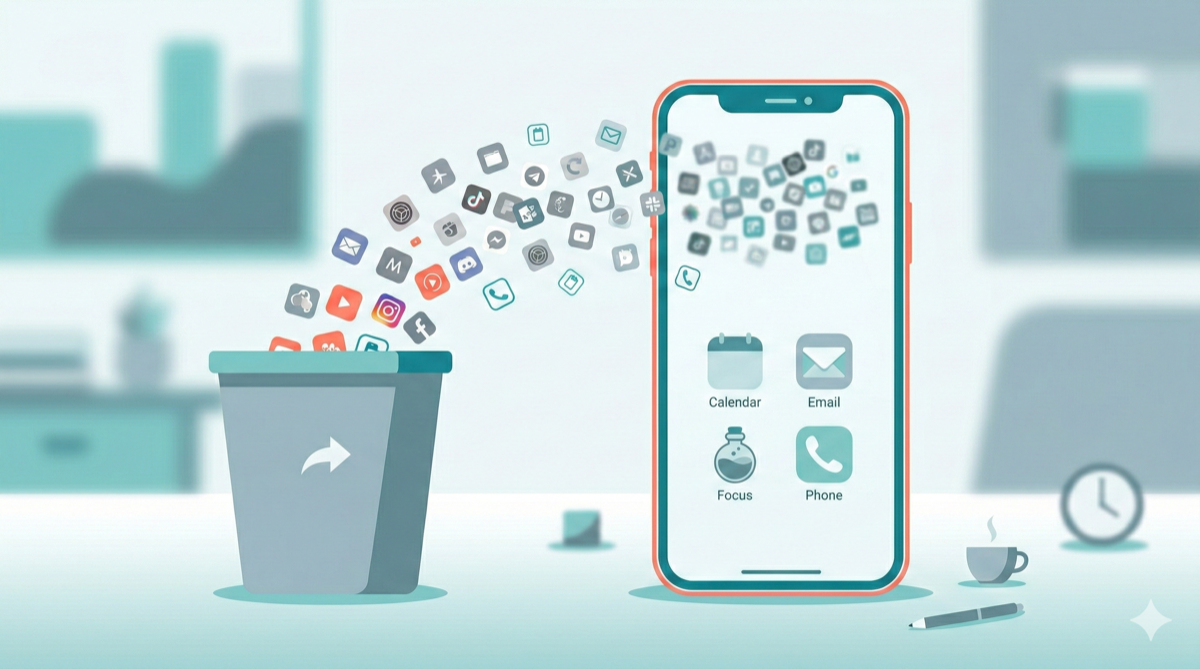
Single-Tasking in a Multitasking World: The Power of Doing One Thing at a Time
Why multitasking is a myth and how single-tasking can dramatically improve your productivity, work quality, and mental well-being.

Single-Tasking in a Multitasking World: The Power of Doing One Thing at a Time
We wear multitasking as a badge of honor. Answering emails during meetings, listening to podcasts while writing, juggling five browser tabs — it feels productive. But neuroscience tells a different story: multitasking doesn't exist. What we call multitasking is actually rapid task-switching, and it's destroying our productivity.
The Multitasking Myth
Your Brain Can't Do Two Cognitive Tasks at Once
The human brain processes conscious tasks sequentially, not simultaneously. When you "multitask," your brain rapidly switches between tasks. Each switch has a cost:
- Switching time: It takes your brain 15–25 minutes to fully re-engage with a task after switching
- Error rate increases: Studies show a 50% increase in errors when multitasking
- IQ drops: A University of London study found that multitasking during cognitive tasks reduced IQ scores by an average of 15 points
The Cost is Invisible
Multitasking feels efficient because you're busy. But being busy and being productive are not the same thing. You might touch 10 tasks in a day but finish none of them well.
What is Single-Tasking?
Single-tasking means dedicating your full attention to one task at a time. It's not about doing less — it's about doing each thing fully before moving to the next.
Why Single-Tasking Works
Deeper Focus
When you commit to one task, you enter a state of flow more easily. Flow is where your best work happens — creative breakthroughs, elegant solutions, and high-quality output.
Faster Completion
Paradoxically, doing one thing at a time gets everything done faster. Without switching costs, each task takes less total time.
Less Stress
Juggling multiple tasks creates a feeling of being overwhelmed. Single-tasking brings calm clarity — you know exactly what you're doing and why.
Higher Quality
Full attention means fewer errors, better decisions, and more thoughtful work.
How to Practice Single-Tasking
1. Choose One Task
Before you start working, decide on exactly one thing you'll focus on. Write it down.
2. Remove All Other Inputs
- Close unrelated tabs
- Silence your phone
- Close email and chat apps
- Put on headphones (even without music — it signals "don't interrupt")
3. Set a Timer
Use the Pomodoro Technique: set a 25-minute timer and focus exclusively on your chosen task. If a thought about another task pops up, jot it on a notepad and return to your work.
4. Complete or Pause, Then Switch
Either finish the task or reach a natural stopping point before moving on. Never leave a task mid-thought to jump to another.
5. Batch Similar Tasks
Group similar activities together:
- Answer all emails in one batch
- Make all phone calls back-to-back
- Process all admin tasks in a single block
The Single-Tasking Challenge
Try this for one week:
- Day 1–2: Single-task during your morning work block only
- Day 3–4: Extend to your afternoon block
- Day 5: Single-task for the full workday
- Weekend: Reflect on what changed
Most people report finishing more in a single-tasking day than in a typical multitasking day — with less exhaustion.
Single-Tasking + Pomodoro
The Pomodoro Technique is essentially a single-tasking framework:
- Each Pomodoro = one task, full attention
- The timer creates a commitment: "For these 25 minutes, I do only this"
- Breaks provide the space to switch contexts guilt-free
- Tracking Pomodoros shows you how much focused work you actually did
Conclusion
In a world that rewards busyness, single-tasking is a quiet rebellion. It means choosing depth over breadth, quality over quantity, and focus over frenzy. Try it for a week. The results will speak for themselves.
Practice single-tasking with Porotimer — one task, one timer, full focus.