How to Overcome the Afternoon Slump Without More Caffeine
Practical, science-backed strategies to beat the post-lunch energy dip and stay productive through the second half of your day.
How to Overcome the Afternoon Slump Without More Caffeine
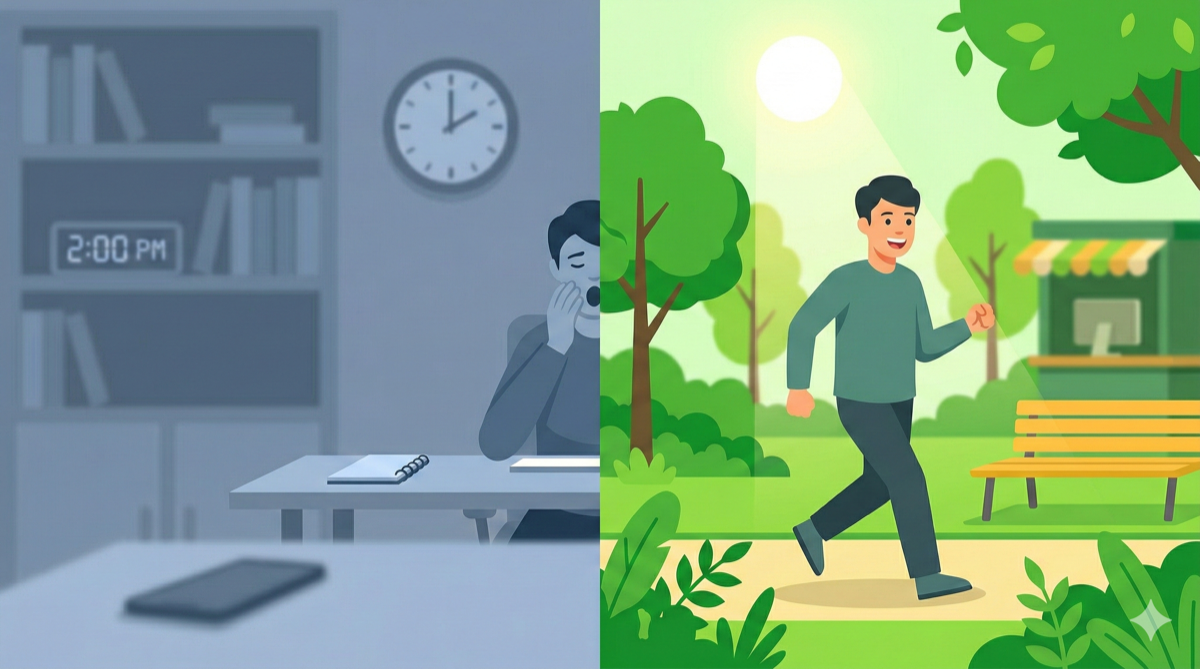
It's 2 PM. Your eyelids are heavy, your focus is gone, and your hand is reaching for another cup of coffee. The afternoon slump is nearly universal, but it doesn't have to ruin the second half of your day. Here's how to beat it — without relying on caffeine.
Why the Afternoon Slump Happens
Circadian Rhythm
Your body's internal clock has a natural dip in alertness between 1–3 PM. This is a biological pattern, not a personal failing. It's related to a slight drop in core body temperature that signals sleepiness.
Post-Lunch Blood Sugar
Heavy, carb-rich lunches cause a blood sugar spike followed by a crash. This crash amplifies the natural circadian dip.
Decision Fatigue
By afternoon, you've already made hundreds of decisions. Your mental reserves are lower, making focus harder.
Sleep Debt
If you didn't sleep well the night before, the afternoon slump hits harder and lasts longer.
Strategies That Actually Work
1. Move Your Body
A 10-minute walk after lunch is one of the most effective slump-busters. Movement:
- Increases blood flow to the brain
- Releases endorphins and adrenaline
- Resets your alertness levels
You don't need an intense workout — a brisk walk outside is enough.
2. Eat a Better Lunch
Swap heavy carbs for balanced meals:
- Include protein: Chicken, fish, eggs, beans
- Add healthy fats: Avocado, nuts, olive oil
- Choose complex carbs: Whole grains, vegetables
- Avoid sugar spikes: Skip the soda and dessert
3. Use Strategic Pomodoro Sessions
When your energy is low, 25 minutes of focus feels much more achievable than an open-ended afternoon. The Pomodoro Technique helps by:
- Breaking the afternoon into manageable chunks
- Providing frequent breaks to reset
- Creating small wins that build momentum
4. Take a Power Nap
A 10–20 minute nap between 1–3 PM can dramatically boost alertness without affecting nighttime sleep. Set an alarm — longer naps can cause grogginess.
5. Get Bright Light
Exposure to bright light suppresses melatonin (the sleep hormone). If you can't go outside, sit near a window or use a bright desk lamp.
6. Hydrate
Mild dehydration causes fatigue before you feel thirsty. Keep water at your desk and aim for a glass every hour.
7. Save Easy Tasks for the Slump
Accept that 2 PM isn't the time for your hardest work. Schedule lighter tasks during your natural dip:
- Responding to emails
- Filing and organizing
- Routine administrative work
- Catching up on reading
Save deep work for your morning peak.
8. Try Cold Water
Splash cold water on your face or hold a cold drink. Cold stimuli trigger an alertness response in your nervous system.
An Afternoon Routine That Works
- 12:30 — Balanced lunch (away from your desk)
- 1:00 — 10-minute walk outside
- 1:15 — Light tasks (email, admin)
- 2:00 — Pomodoro session with easier work
- 2:30 — Short break + hydrate
- 2:35 — Pomodoro session
- 3:00 — Energy starts returning naturally
- 3:15 — Return to deeper work
What to Avoid
- More caffeine after 2 PM — It disrupts your sleep tonight, making tomorrow's slump worse
- Sugar and energy drinks — They cause another crash
- Fighting through it — Forcing focus when you're depleted produces low-quality work
- Scrolling your phone — It feels like a break but doesn't restore energy
Conclusion
The afternoon slump is natural, but it doesn't have to be a productivity black hole. With the right strategies — movement, nutrition, strategic task placement, and Pomodoro sessions — you can stay effective all afternoon without drowning in coffee.
Power through your afternoons with focused Pomodoro sessions on Porotimer.